
Ealing comedies
British comedy film cycle from Ealing Studios, 1947–1957.

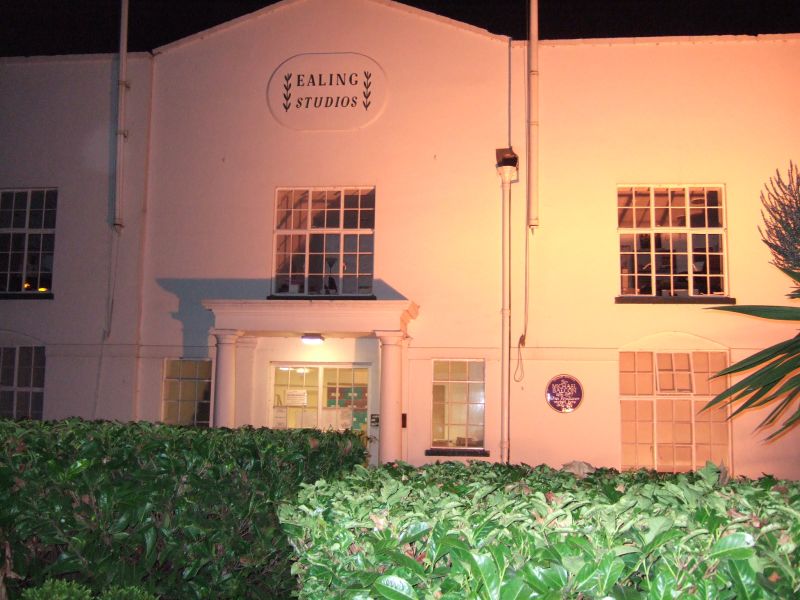
Images George Rex from London, England · CC BY-SA 2.0
The Ealing comedies is the nickname given to a group of comedy films made at London’s Ealing Studios from 1947 to 1957. They are often seen as capturing the mood of Britain after the Second World War. The best-known titles in this group are *Kind Hearts and Coronets* (1949), *Whisky Galore!* (1949), *The Lavender Hill Mob* (1951), *The Man in the White Suit* (1951), and *The Ladykillers* (1955). Many of these films are considered among the finest British movies ever made, and they also found success with audiences overseas.
**History**
Ealing Studios produced very few comedies until several years after the war ended. The 1939 film *Cheer Boys Cheer*, which pits a large, modern brewery against a small, traditional one, is sometimes seen as a forerunner of the later comedies. Another early example is *Saloon Bar* (1940), where the regulars at a pub work together to prove the innocence of a barmaid’s boyfriend, who has been accused of murder. Other wartime comedies, starring performers like Tommy Trinder, Will Hay, and George Formby, were more in the music-hall style and shared little with the later Ealing films. In fact, Ealing released no comedies at all in 1945 and 1946.
**Comedies**
The first film in the cycle is generally considered to be *Hue and Cry* (1947), written by T. E. B. Clarke. It tells the story of schoolboys who take on a criminal gang and was a hit with both critics and audiences. Three films with Celtic themes followed: *Another Shore* (1948), about a bored Dublin customs officer lost in his own fantasies; *A Run for Your Money* (1949), following two inexperienced Welshmen in London for a big rugby match; and *Whisky Galore!* (1949), in which Scottish islanders during the war find a shipwrecked freighter loaded with whisky.
*Kind Hearts and Coronets* (1949) is a black comedy where the son of a poor branch of the aristocratic D’Ascoyne family murders eight relatives—all played by Alec Guinness—to inherit the dukedom and get back at his snobbish family. In *Passport to Pimlico* (1949), the discovery of a medieval charter allows the residents of a London neighborhood to declare themselves an independent nation, ending rationing but causing diplomatic headaches with the British government.
*The Magnet* (1950), set in Liverpool, follows a boy whose new magnet leads him into a series of adventures. *The Lavender Hill Mob* (1951) features a ti
- field
- Film comedy
- nationality
- British
- active_years
- 1947–1957 (with later films in 1957 and 1958)
- known_for
- Post-war comedy films reflecting British spirit
- notable_films
- Kind Hearts and Coronets, Whisky Galore!, The Lavender Hill Mob, The Man in the White Suit, The Ladykillers
Lore & Background
Relatively few comedy films were made at Ealing Studios until several years after World War II. The 1939 film Cheer Boys Cheer has been characterised as a prototype of later films, and Saloon Bar (1940) is seen as a direct precursor. Ealing made no comedy films at all in 1945 and 1946. The cycle began with Hue and Cry (1947), written by T. E. B. Clarke, about schoolboys confronting a criminal gang. It was followed by films with Celtic themes: Another Shore (1948), A Run for Your Money (1949), and Whisky Galore! (1949). Kind Hearts and Coronets (1949) is a black comedy in which Alec Guinness played eight members of the D'Ascoyne family. Passport to Pimlico (1949) involved a London neighbourhood declaring independence. The Lavender Hill Mob (1951) featured a bank clerk's gold bullion heist, and The Man in the White Suit (1951) a scientist's indestructible fabric. The Ladykillers (1955) saw a gang thwarted by an elderly landlady. Who Done It? (1956) was the final comedy made at Ealing Studios before it was sold to the BBC. Two final comedies were released under the Ealing banner but made at Elstree Studios: Barnacle Bill (1957) and Davy (1958). No further comedies were made by Ealing.
Reader's Guide
The Ealing comedies are significant as a distinctive cycle of British comedy films produced in a concentrated period after World War II. Though Ealing Studios is remembered for its comedies, they were only a tenth of its productions. Many of the films were built around a repertory group of actors, screenwriters, directors and technicians. Directors included Alexander Mackendrick, Charles Crichton, Robert Hamer, Charles Frend, Michael Relph and Henry Cornelius. Notable actors included Stanley Holloway, Alec Guinness, Joan Greenwood, Cecil Parker, Moira Lister and Peggy Cummins. The films received international acclaim, with several winning or nominated for major awards: The Lavender Hill Mob won the Academy Award for Best Writing, Story and Screenplay and the BAFTA Award for Best British Film; The Ladykillers won the BAFTA Award for Best British Screenplay and was nominated for an Academy Award for Best Original Screenplay. Kind Hearts and Coronets was included in Time's list of the top 100 films since 1923. Former North Korea leader Kim Jong Il was said to have been a fan, inspired by their emphasis on team spirit and a mobilised proletariat. The Ealing comedies were adapted for radio and broadcast over BBC Radio 4.
Did You Know?
- Hue and Cry (1947) is generally considered the earliest Ealing comedy, and Barnacle Bill (1957) the last, though some sources list Davy (1958) as the final one.
- In Kind Hearts and Coronets (1949), Alec Guinness played eight different members of the D'Ascoyne family.
- The Ladykillers (1955) was Peter Sellers' first major film role; he starred opposite Alec Guinness.
- Former North Korea leader Kim Jong Il was said to have been a fan of Ealing comedies.
The Post-War Comedy Renaissance
The Ealing comedies occupy a singular place in British cinema history. Between 1947 and 1957, the London-based Ealing Studios produced a string of comedy films that have since become synonymous with a particular vision of post-war British life. The cycle is generally bookended by Hue and Cry in 1947 and Barnacle Bill in 1957, though some accounts extend the list to include Davy the following year. Within that decade, a handful of titles rose above the rest to achieve near-canonical status: Kind Hearts and Coronets, Whisky Galore!, The Lavender Hill Mob, The Man in the White Suit, and The Ladykillers. These films are frequently ranked among the finest British pictures ever made and have also earned significant praise on the international stage. What unites them is a shared confidence in wit, social observation, and the quiet triumph of the ordinary person over entrenched authority.
The Underdog Against the Machine
A defining narrative engine across the Ealing canon is the confrontation between a small, often scrappy group and a larger institutional force. In Passport to Pimlico, the residents of a London neighbourhood invoke a medieval charter to declare independence and abolish rationing, triggering diplomatic headaches for the British government. The Titfield Thunderbolt transposes this same conflict to the countryside, where villagers fight to save their branch railway line from closure by British Railways while a rival bus company works to sabotage their efforts. The Man in the White Suit escalates the stakes: a young scientist's invention of a stain-proof, wear-proof fabric prompts both big business and trade unions to team up and suppress the discovery. Even in The Ladykillers, it is the elderly Mrs Wilberforce who ultimately outwits a gang of would-be robbers. The pattern is consistent: the powerless prevail through ingenuity, solidarity, and sheer stubbornness.
From Music Hall to Maturity: The Precursor Years
The Ealing comedies did not emerge from a vacuum of British comedy tradition, yet they were distinctly unlike what came before. Two pre-war pictures are often cited as proto-Ealing: Cheer Boys Cheer (1939), which pitted a large modernist brewery against a small traditional one, and Saloon Bar (1940), in which the regulars of a pub band together to clear a barmaid's boyfriend of a murder charge. The broader wartime output featuring names like Tommy Trinder, Will Hay, and George Formby belonged to a music-hall idiom that shared little DNA with the later cycle. Notably, Ealing produced no comedy films whatsoever in 1945 or 1946. The silence was broken by Hue and Cry in 1947, a story of schoolboys confronting a criminal gang that was both a critical and a commercial triumph. It was followed by a run of Celtic-themed pictures—Another Shore, A Run for Your Money, and Whisky Galore!—that helped establish the studio's distinctive voice.
The Studio's Final Chapter and Lasting Footprint
The Ealing comedy era drew to a close as the studio itself changed hands. Who Done It? (1956) was the last comedy shot at Ealing Studios before the facility was sold to the BBC, and its tone leaned more toward the broad 1930s style than the refined social satire the studio had become known for. Two further titles, Barnacle Bill (1957) and Davy (1958), carried the Ealing name but were actually produced at Elstree Studios. After the thriller Siege of Pinchgut in 1959, the Ealing brand was folded into the wider Rank Organisation. Rank did release Rockets Galore!, a sequel to Whisky Galore!, but that production had no connection to Ealing. Throughout the cycle, the films had been built around a repertory company of actors, writers, directors, and technicians, a collaborative model that gave the output its cohesive feel. That collective spirit, combined with the films' enduring popularity both at home and abroad, has cemented the Ealing comedies as a cornerstone of British cinematic heritage.
Gallery
Frequently Asked Questions
What are the Ealing comedies?
The Ealing comedies are a group of British comedy films produced at Ealing Studios in London between 1947 and 1957. They are widely regarded as a defining body of post-war British cinema.
What years did the Ealing comedies span?
The core run of Ealing comedies lasted from 1947 through 1957, with a couple of additional titles appearing in 1957 and 1958.
Which Ealing comedies are the most well-known?
The most celebrated titles include Kind Hearts and Coronets (1949), Whisky Galore! (1949), The Lavender Hill Mob (1951), The Man in the White Suit (1951), and The Ladykillers (1955).
Why are the Ealing comedies considered important?
They are often viewed as capturing the spirit and mood of Britain in the years following World War II. Many of these films are ranked among the finest British movies ever made and also achieved international audience success.
Where were the Ealing comedies produced?
All of these films were made at Ealing Studios, a production facility located in London, England.
More in Comedy film series 1-24
Spotted an error? Know more?
This is a living reference — every entry is fact-audited, and reader corrections feed straight into our audit queue. Suggest an edit · See this site's audit record