
Blondie (film series)
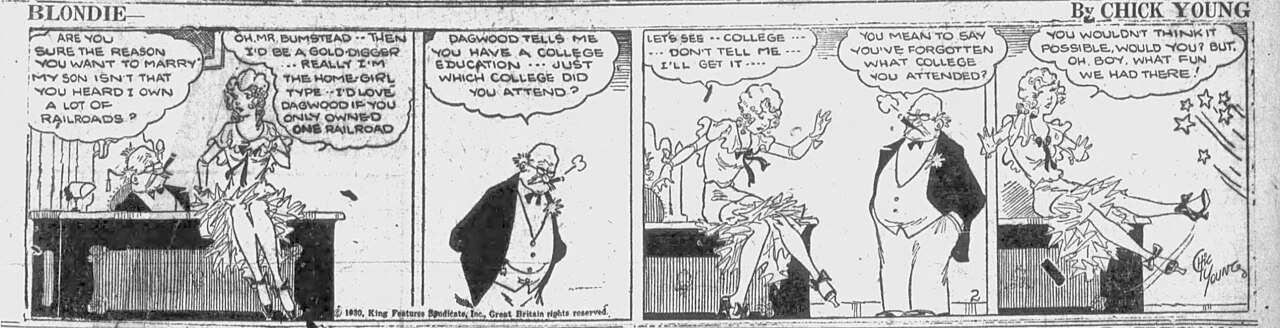
Twenty-eight films based on the comic strip.

Raph_PH · CC BY 2.0
The Blondie film series is an American comedy film series based on the comic strip of the same name, created by Chic Young. Produced by Columbia Pictures from 1938 to 1950, the series featured Penny Singleton as Blondie Bumstead and Arthur Lake as Dagwood Bumstead, with the same cast also reprising their roles in a concurrent radio series. The films were typical of family-fare situational comedies of the period and are noted for their faithfulness to the comic strip, including iconic touches such as Dagwood's famous sandwiches and the running gag of Dagwood colliding with the mailman.
- field
- Film series
- nationality
- American
- known_for
- Comedy film series based on the Chic Young comic strip
- producer
- Columbia Pictures
- years_active
- 1938–1950
- number_of_films
- 28
Lore & Background
Columbia Pictures produced the Blondie films continuously from 1938 to 1950, with no gap in production. The series showcased many of Columbia's contract players, including Rita Hayworth in Blondie on a Budget, Glenn Ford in Blondie Goes to College and Blondie's Lucky Day, Larry Parks and Janet Blair in Blondie Goes to College, Shemp Howard in Blondie Knows Best, and Adele Jergens in Blondie's Anniversary. Other contractees appearing included Doris Houck, Bruce Bennett, Lloyd Bridges, Ann Doran, Stanley Brown, Richard Fiske, Bud Jamison, Eddie Laughton, John Tyrrell, Alyn Lockwood, Jimmy Lloyd, Walter Soderling, Gay Nelson, and Ross Ford.
Faithfulness to the comic strip was a major concern of the creators. Little touches were added that were iconic to the strip, such as Dagwood's sandwiches and the mailman collision gag, which preceded the title sequence in TV versions distributed by King Features. As the series progressed, the Bumstead children grew from toddlers to young adults onscreen. Larry Simms as Baby Dumpling (later Alexander) appeared in all films, and Danny Mummert as Alvin Fuddle appeared in more than twenty. Daughter Cookie was played by three different child actresses, beginning in 1942 with her first appearance as an infant in Blondie's Blessed Event. Daisy had pups in the twelfth episode, Blondie for Victory. Character actor Jonathan Hale played Dagwood's irascible boss, J.C. Dithers. The Bumsteads' neighbors, the Woodleys, were oddly missing from the series but appeared in the last film, Beware of Blondie.
Reader's Guide
The Blondie film series holds significance as a long-running adaptation of a popular comic strip, produced by Columbia Pictures over twelve years. The series is notable for its consistent cast, with Penny Singleton and Arthur Lake portraying the lead roles across all twenty-eight films, and for featuring many contract players who later became stars. The films were typical of family-fare situational comedies of the period, and their faithfulness to the comic strip—including iconic gags like Dagwood's sandwiches and the mailman collision—helped maintain audience appeal. The series was produced from 1938 to 1943, then revived in 1945 due to popular demand, and Columbia later reissued the features beginning with the first film. The films also allowed the Bumstead children to age onscreen, with Larry Simms reprising his role as Baby Dumpling in every entry. The series' legacy lies in its enduring representation of mid-century American family comedy and its role as a showcase for Columbia's talent.
Did You Know?
- The same cast that appeared in the films also reprised their roles in the Blondie radio series.
- Rita Hayworth was featured in Blondie on a Budget.
- Daisy had pups in the twelfth episode, Blondie for Victory (1942).
- The Bumsteads' neighbors, the Woodleys, were missing from most of the series but appeared in the last film, Beware of Blondie.
Columbia's Studio Showcase
Columbia Pictures turned the Blondie franchise into a vehicle for promoting its stable of contract talent across twenty-eight features spanning 1938 to 1950. Beyond the leads, each installment offered a platform for rising and established names. Rita Hayworth appeared in Blondie on a Budget, Glenn Ford starred in Blondie Plays Cupid, and the pairing of Larry Parks with Janet Blair headlined Blondie Goes to College. Shemp Howard brought his comedic energy to Blondie Knows Best, while Adele Jergens featured in Blondie's Anniversary. The supporting ensemble drew heavily from Columbia's roster: Doris Houck, Bruce Bennett, Lloyd Bridges, Ann Doran, Stanley Brown, Richard Fiske, Bud Jamison, Eddie Laughton, John Tyrrell, Alyn Lockwood, Jimmy Lloyd, Walter Soderling, Gay Nelson, and Ross Ford all found their way into various entries. This practice made the series function almost as a rotating talent showcase, giving the studio a reliable, family-friendly context in which to display its contracted performers to a broad audience.
Faithfulness to the Strip
The filmmakers treated Chic Young's comic strip as a sacred text, weaving in small but recognizable details that longtime readers would immediately spot. Dagwood's infamous sandwiches appeared on screen as a visual callback to the panels, and the recurring bit of Dagwood bumping into the mailman in a storm of envelopes became a signature moment. That particular gag even preceded the title sequence in the television versions later distributed by King Features, proving its enduring appeal. The tone stayed deliberately low-key and situational, fitting squarely within the family-fare comedy conventions of the era. One notable absence stood out for years: the Woodley family, Dagwood and Blondie's neighbors in the strip, were conspicuously missing from the films until the very final entry, Beware of Blondie (1950). This long gap suggests the studio either lacked the rights or simply chose to focus on the core Bumstead household for most of the run.
The Growing Bumstead Household
As the series stretched across twelve years, the Bumstead children visibly aged on screen, transforming from toddlers into young adults. Larry Simms, who played Baby Dumpling—later called Alexander—returned to his role in every single film, providing a thread of continuity through the entire run. Danny Mummert, as Alvin Fuddle, appeared in more than twenty of the twenty-eight entries, anchoring the child ensemble. Daughter Cookie's story was more fragmented: she first appeared as an infant in Blondie's Blessed Event (1942), the eleventh film, and was portrayed by three different child actresses over the course of the series. Even the family dog, Daisy, got a narrative moment when she produced a litter of pups in Blondie for Victory (1942), the twelfth installment. Rounding out the household's orbit, character actor Jonathan Hale played J.C. Dithers, Dagwood's perpetually irritable boss, a role that gave the films a reliable source of workplace comedy.
Cross-Media Longevity and the Full Catalog
The Blondie franchise was never confined to the silver screen. While Columbia was producing its film series, the same cast—Penny Singleton and Arthur Lake at the helm—repeatedly reprised their roles in a concurrent Blondie radio program, keeping the characters in regular rotation for a different audience. After the initial run of twenty-eight films concluded in 1950, Columbia reissued the features, starting with the very first 1938 picture, ensuring that new generations of theatergoers could encounter the series. The production timeline itself tells a story of sustained popular demand: Columbia released films steadily from 1938 through 1943, paused for a year, then revived the franchise in 1945 before continuing through 1950. The titles themselves—Blondie Goes Latin, Blondie in Society, Blondie in the Dough, Blondie Hits the Jackpot—reflect a formula of placing the couple in increasingly varied settings while preserving the gentle, domestic comedy that defined the strip.
Gallery




Frequently Asked Questions
What is the Blondie film series?
It is a run of American comedy features made by Columbia Pictures between 1938 and 1950, adapted from Chic Young's long-running newspaper comic strip. The movies follow the everyday mishaps of the Bumstead family in a lighthearted, family-friendly format typical of the era.
Who played Blondie and Dagwood in the films?
Penny Singleton portrayed Blondie Bumstead and Arthur Lake played her husband Dagwood across the entire series. The two also brought the same characters to life on a parallel radio show during the same period.
How many movies are in the Blondie series?
Columbia Pictures produced a total of twenty-eight Blondie features over the twelve-year run from 1938 to 1950. That makes it one of the longest-running comedy film franchises of the classic Hollywood era.
What are the most recognizable recurring gags in the Blondie films?
Dagwood's famously over-stuffed sandwiches and his habit of bumping into the mailman are two signature bits carried over from the original strip. The movies were praised for staying closely faithful to the comic's visual humor and character dynamics.
Why is the Blondie film series considered important in film history?
It stands out as a rare example of a franchise that stayed remarkably true to its source material over nearly two decades. The series also showed how a newspaper comic strip could sustain a major studio's production schedule with the same lead actors for twelve consecutive years.
More in Comedy film series 1-24
Spotted an error? Know more?
This is a living reference — every entry is fact-audited, and reader corrections feed straight into our audit queue. Suggest an edit · See this site's audit record