
Crocodile Dundee (film series)
Three films following an Outback adventurer in new worlds.

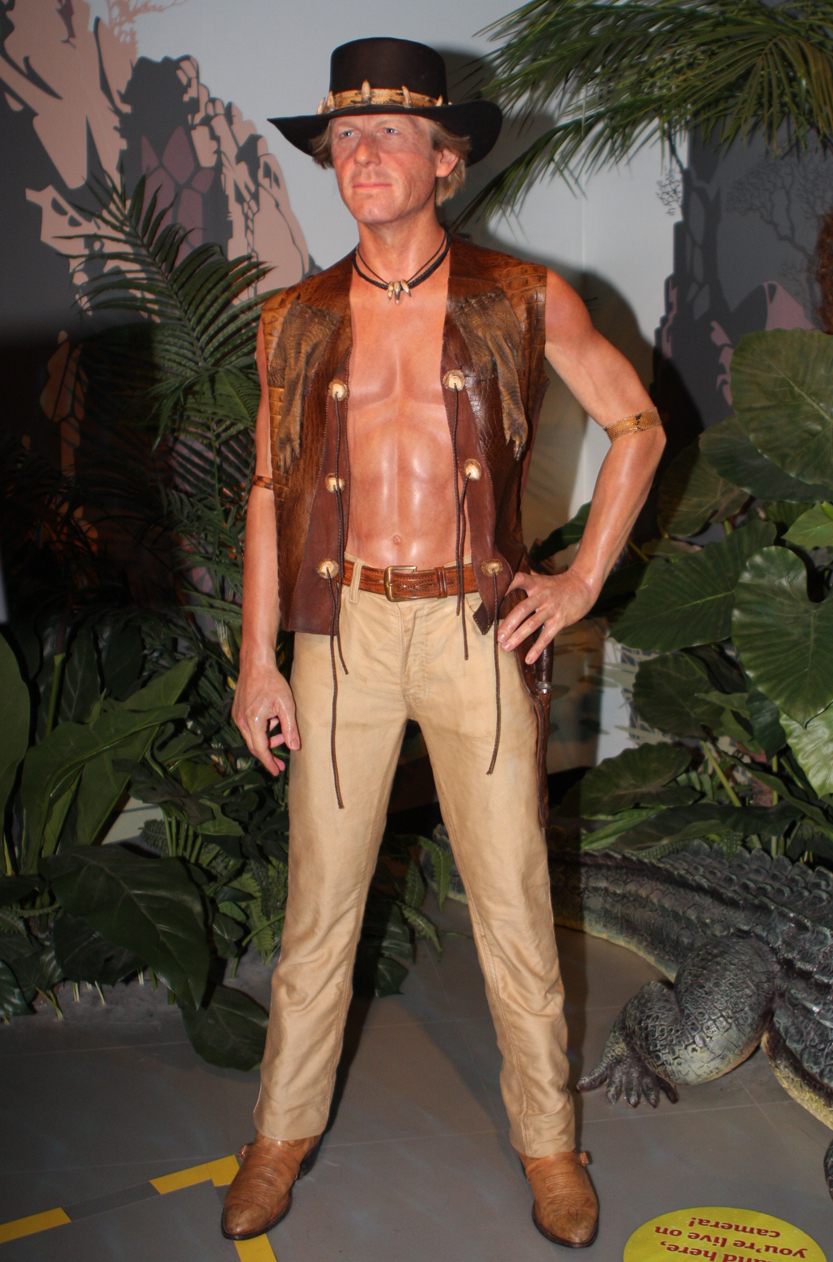
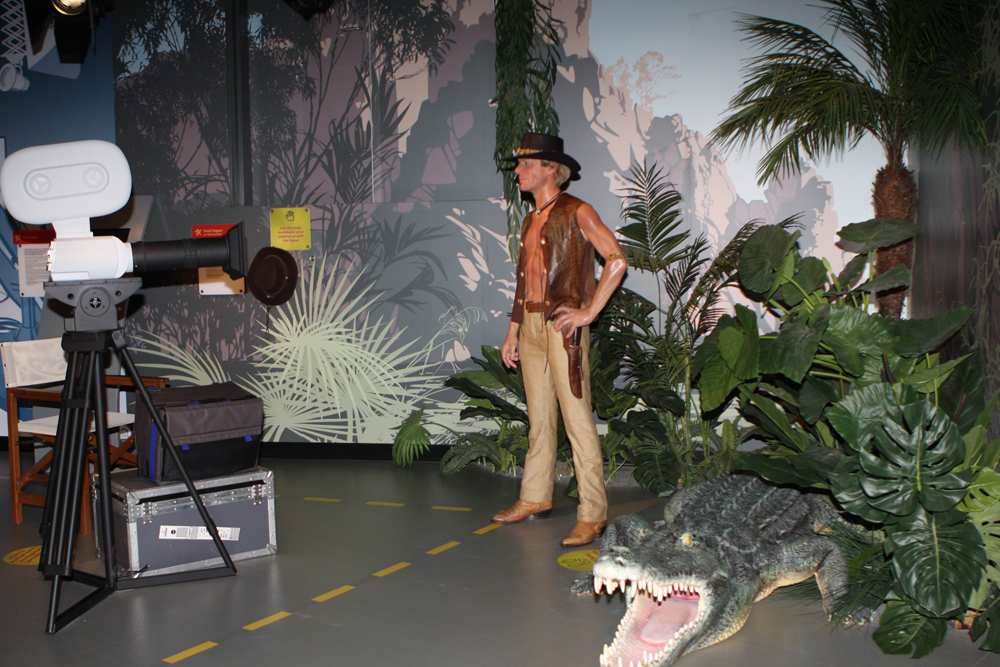
Eva Rinaldi · CC BY-SA 2.0
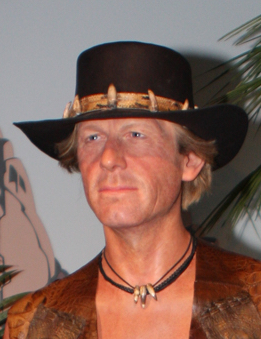
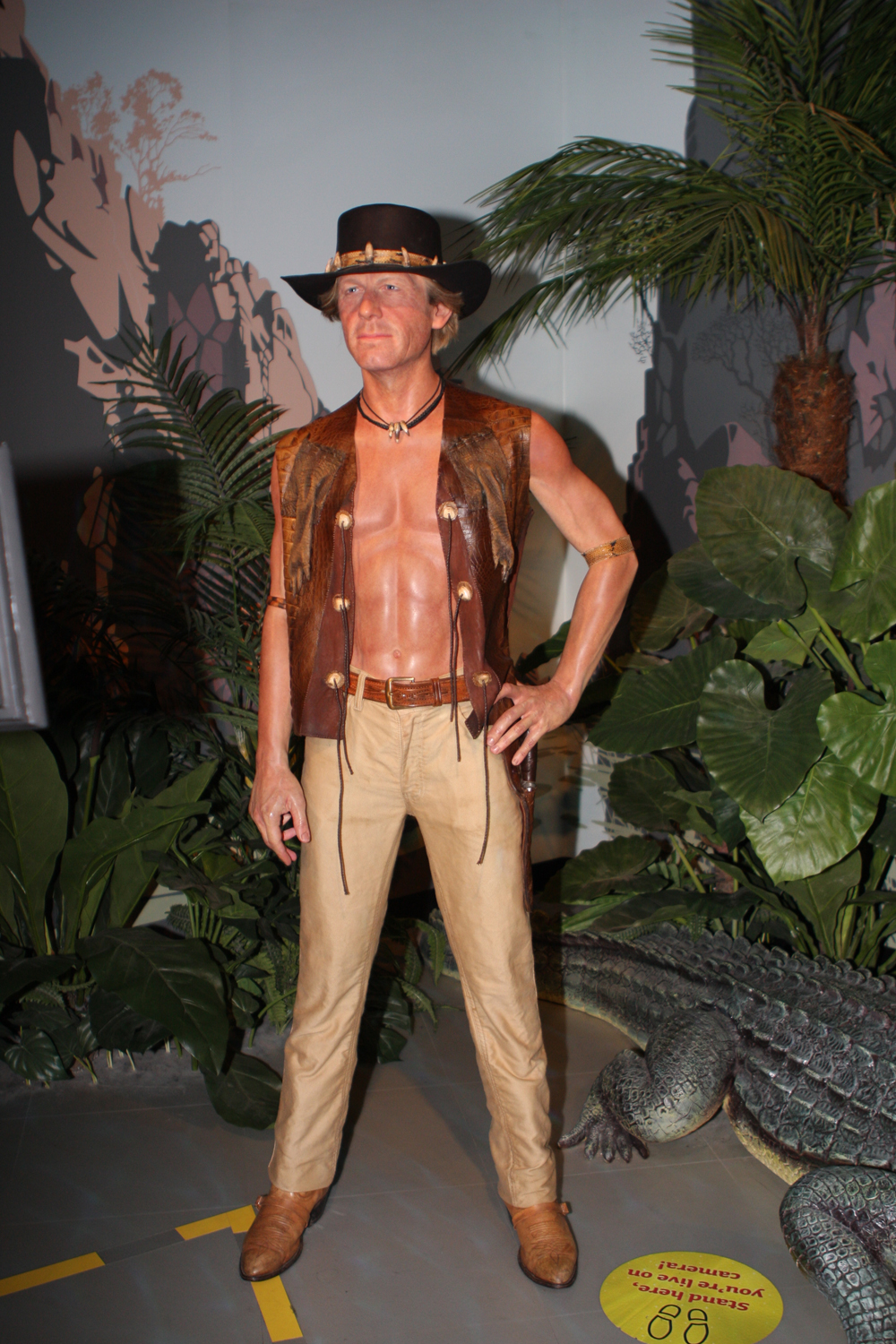
The Crocodile Dundee trilogy is a series of action-comedy films centered on Michael J. 'Crocodile' Dundee, a crocodile hunter from the Australian Outback. Starring Paul Hogan in the title role, the trilogy follows Dundee's adventures as he navigates life in the Australian wilderness, New York City, and later Los Angeles. The films were released over the course of three feature films, with Hogan refusing several proposals for additional installments.
- field
- Action-comedy film series
- known_for
- Centered on crocodile hunter Michael J. 'Crocodile' Dundee, starring Paul Hogan
- number_of_films
- 3
- first_film
- Crocodile Dundee (1986)
- second_film
- Crocodile Dundee II (1988)
- third_film
- Crocodile Dundee in Los Angeles (2001)
Lore & Background
The trilogy begins with Crocodile Dundee (1986), in which New York reporter Sue Charlton travels to Australia to interview the legendary crocodile hunter. She brings him back to New York City, where Dundee is amazed by urban life. In Crocodile Dundee II (1988), Dundee is settling into Manhattan when a South American drug dealer abducts Sue, prompting Dundee to use his hunting skills to rescue her. The third film, Crocodile Dundee in Los Angeles (2001), sees Dundee moving to Los Angeles with Sue, who becomes a newspaper bureau chief, and he becomes an amateur undercover investigator amid a Hollywood studio conspiracy.
Paul Hogan starred as Dundee in all three films. Hogan refused several proposals for more Crocodile Dundee films. In 2018, a Super Bowl commercial campaign for Tourism Australia featured fake trailers for a purported new film titled Dundee, starring Danny McBride as Dundee's son, with cameos by Australian actors including Chris Hemsworth, Hugh Jackman, and Russell Crowe. Chris Hemsworth confirmed in February 2018 the possibility of creating a film based on the commercial, but no such film has been produced.
Reader's Guide
The Crocodile Dundee trilogy holds significance as a popular action-comedy series that introduced global audiences to an Australian Outback character navigating contrasting environments. The first film established the fish-out-of-water premise, while the sequels expanded Dundee's adventures to urban and Hollywood settings. The series' legacy includes Paul Hogan's refusal of further sequels, and a 2018 Super Bowl marketing campaign that generated public interest in a potential reboot, though no new film materialized. The trilogy was released on Blu-ray in the U.S. on September 21, 2021, with the third film making its Blu-ray debut. The series remains a notable example of 1980s and 1990s Australian cinema reaching international audiences.
Did You Know?
- Paul Hogan refused several proposals for more Crocodile Dundee films.
- The third film, Crocodile Dundee in Los Angeles, was released in 2001.
- The trilogy was released on Blu-ray in the U.S. on September 21, 2021.
- A 2018 Super Bowl commercial campaign for Tourism Australia featured fake trailers for a film titled Dundee, with cameos by Chris Hemsworth, Hugh Jackman, and Russell Crowe.
Origins & Production Philosophy
The concept for Crocodile Dundee struck Paul Hogan during a stay in New York, where he imagined what would happen if a rugged Northern Territory bushman stumbled into the city. He saw the character as a mythical outback figure—the frontiersman who handles snakes casually, rides horses, and lives off the land with a laid-back philosophy. Hogan felt Australia desperately lacked a compelling folk hero, dismissing Ned Kelly and the bushrangers as inadequate. The project was conceived as a deliberate commercial gamble: a sub-$10-million Australian film engineered to resonate with mainstream American audiences. Funding came through 10BA tax concessions raised via Morgan Sharebrokers. Hogan assembled his trusted television collaborators—John Cornell, Peter Faiman, and Ken Shadie—and brought in American actress Linda Kozlowski for the lead female role, despite initial objections from Actors' Equity Australia. Principal photography kicked off in July 1985, with locations spanning McKinlay in Queensland, Kakadu National Park, and the waterways around Darwin.
Box Office Phenomenon
Released in Australia on 30 April 1986 and in the United States on 26 September of the same year, the film became an unprecedented commercial force. It ultimately collected $328 million at the global box office, a figure that cemented its status as the highest-grossing Australian production in history and the top-earning non-American film ever to play in US cinemas. Within 1986 alone, it ranked as the second-biggest domestic US release and the second-highest-grossing picture worldwide for that calendar year. The film's success was so vast that two distinct cuts were issued: an Australian version preserving its original colloquial language, and a slightly trimmed international edition in which much of the regional slang was swapped for more universally recognizable phrasing. This dual-release strategy reflected just how broadly the picture traveled beyond its home market. The fact that a modest, tax-incentivized Australian comedy could outperform major Hollywood tentpoles of the era underscored a genuine cultural crossover that no one in the industry had fully anticipated.
Narrative & Character Dynamics
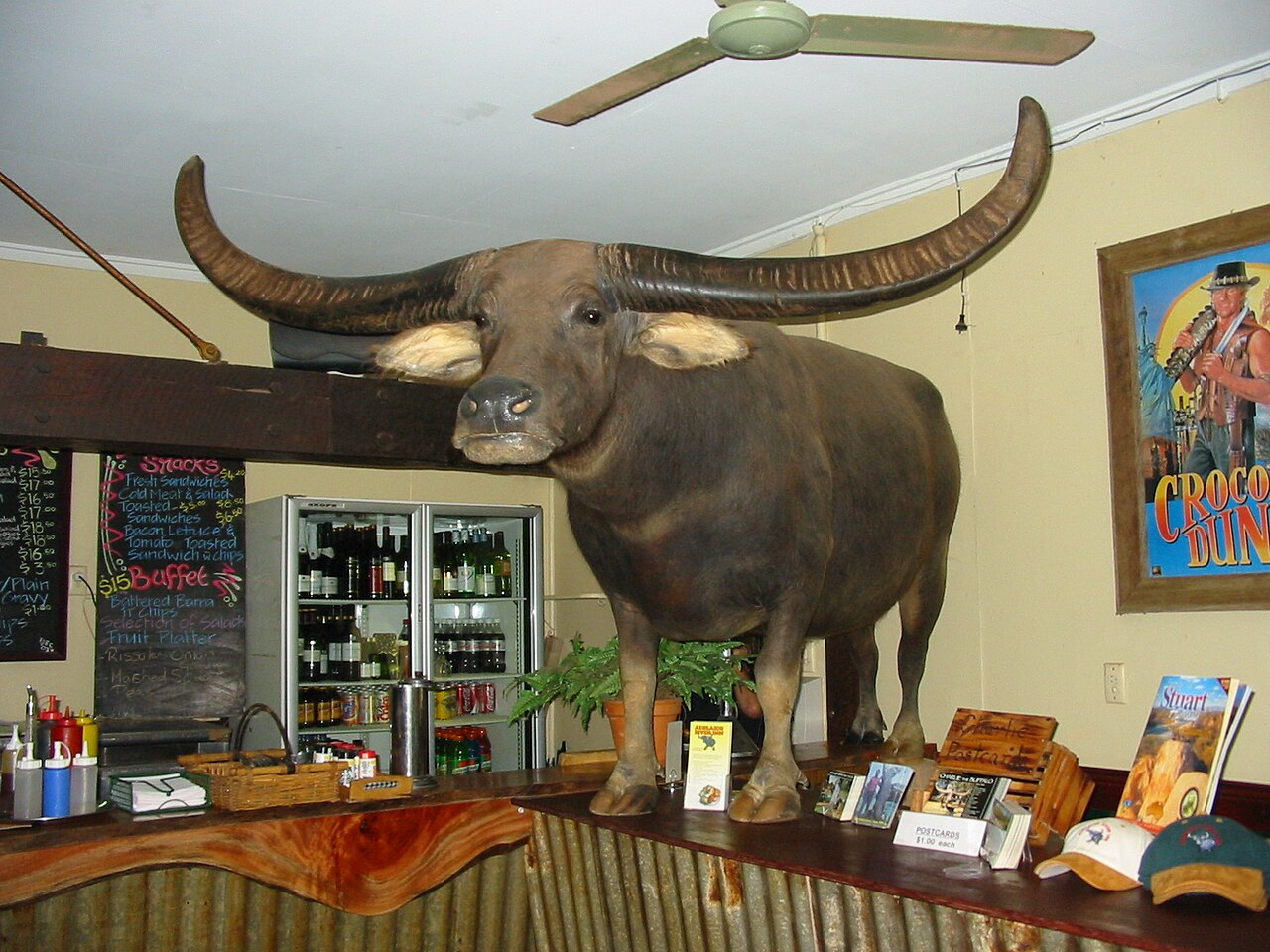
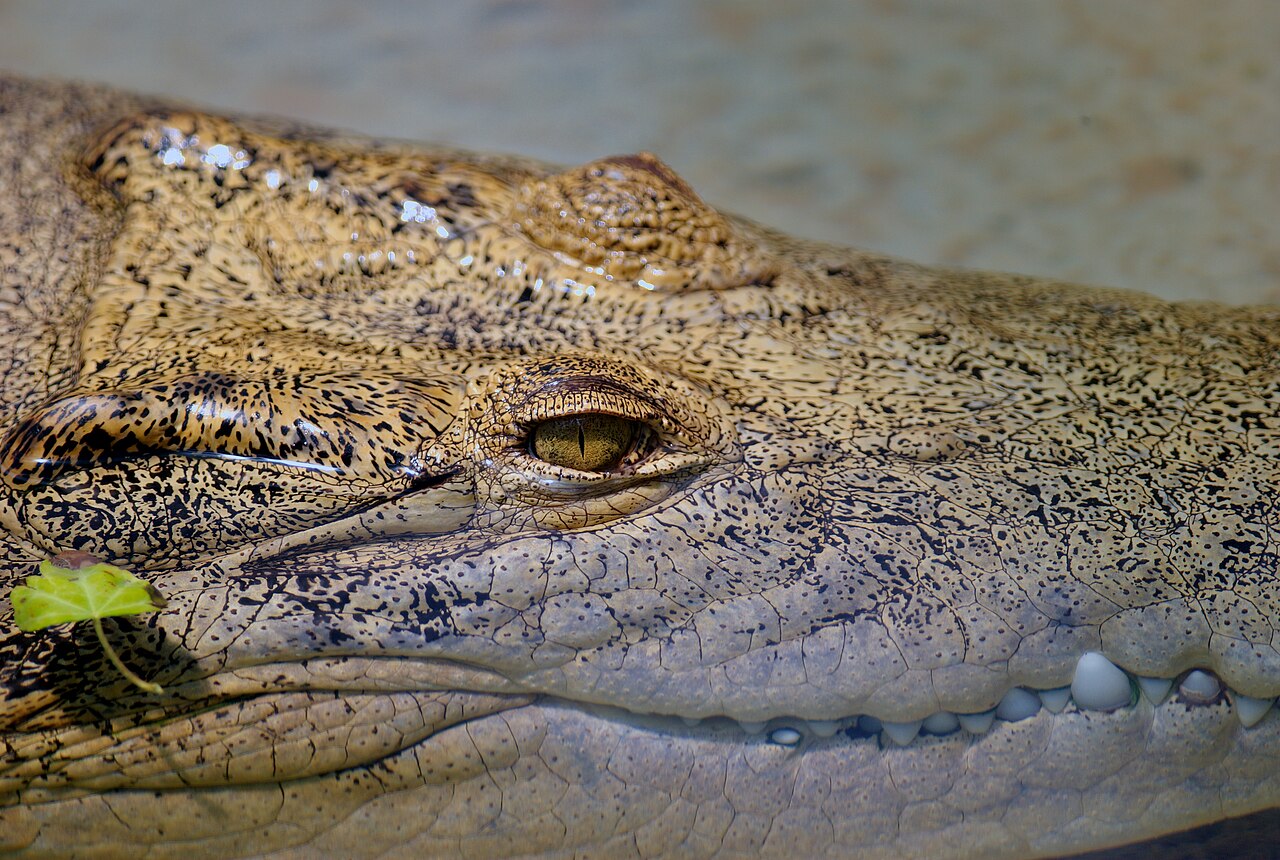
The story draws on the real-life exploits of Rod Ansell to craft a romantic adventure pitting a city reporter against the raw power of the Australian Outback. Sue Charlton, a feature writer for her father's newspaper, travels to the tiny township of Walkabout Creek expecting to find a man who lost half his leg to a saltwater crocodile. Instead she meets Mick Dundee, whose only evidence is a scar he cheerfully calls a 'love bite.' What begins as mutual irritation—her disdain for his rough manners, his teasing about her inability to survive in the bush—gradually transforms into attraction. Key set pieces include Mick subduing a water buffalo, killing a snake with his bare hands, and participating in a Pitjantjatjara tribal dance. The narrative's emotional pivot arrives when Sue, stung by his remark that a 'sheila' couldn't last alone in the Outback, ventures out by herself and is nearly killed by a crocodile before Mick rescues her. The final act transplants both characters into New York, where Mick's improvisational survival instincts and good-humored common sense defuse dangerous encounters, while Sue finds herself torn between her boyfriend Richard and the bushman who saved her life.
Sequels & Franchise Trajectory
As the first installment in what became a three-film trilogy, Crocodile Dundee set a bar its successors could not clear. Crocodile Dundee II, released in 1988, and Crocodile Dundee in Los Angeles, which arrived a full thirteen years later in 2001, both failed to replicate the critical success of the original. The gap between the 1986 hit and its follow-ups highlights a common challenge in franchise filmmaking: the original's specific alchemy of a low-budget Australian production meeting a hungry American audience proved extraordinarily difficult to reproduce. What made the first film feel fresh and unexpected—a modest, tax-incentivized comedy that outgrossed Hollywood's biggest releases—was inherently a one-time cultural event. The sequels, while still part of the same character universe, lacked the same sense of discovery and cross-cultural novelty that had made the initial film a worldwide phenomenon. The trilogy's uneven critical reception ultimately underscores how the 1986 original remains the definitive expression of the Crocodile Dundee concept, a singular achievement in Australian cinema history.
Gallery
Frequently Asked Questions
What is the Crocodile Dundee film series about?
It is a three-part action-comedy franchise that follows an Australian crocodile hunter as he stumbles into the modern world and navigates life far from the Outback. The humor comes from his down-to-earth bushman sensibility clashing with big-city culture.
Who plays Crocodile Dundee in all three films?
Paul Hogan portrays Michael J. 'Crocodile' Dundee throughout the entire trilogy, delivering the character's trademark laid-back charm and deadpan one-liners.
How many movies are in the Crocodile Dundee trilogy?
There are exactly three films: Crocodile Dundee (1986), Crocodile Dundee II (1988), and Crocodile Dundee in Los Angeles (2001). No fourth entry was ever produced.
Where do the Crocodile Dundee adventures take place?
The first two films center on the Australian Outback and New York City, while the third shifts the setting to Los Angeles. Each installment drops Dundee into a new urban environment that contrasts sharply with his bush background.
Why did the Crocodile Dundee series stop at three films?
Paul Hogan declined numerous offers to star in additional installments, effectively capping the franchise at its third movie. The trilogy remains his final on-screen run as the character.
More in Comedy film series 1-24
Spotted an error? Know more?
This is a living reference — every entry is fact-audited, and reader corrections feed straight into our audit queue. Suggest an edit · See this site's audit record